Showing posts with label history. Show all posts

Monday, 28 November 2011

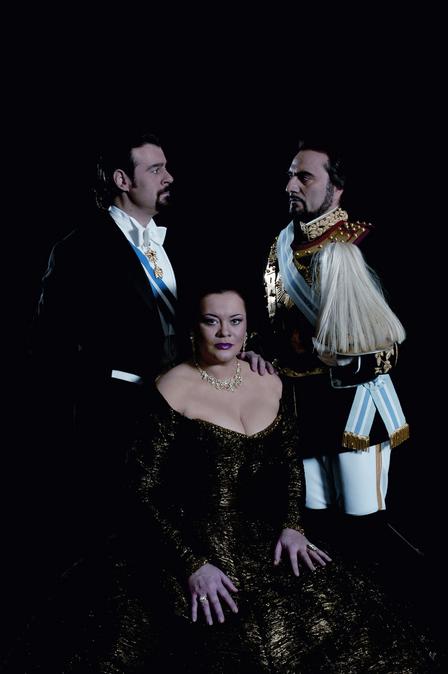
Roberto Devereux by Donizetti

I saw Roberto Devereux twice: 2001-05-12, 2002-09-30. And I have seen the video with Montserrat Caballé and José Carreras. I love the music. It is a "historical" opera with historical persons. But how historical correct is it? Was Queen Elizabeth I of England and Robert Devereux, the 2nd Earl of Essex really as portrayed in this opera? Usually the answer is no because historical opera is seldom historical correct.

I have read Treason In Tudor England by Lacey Baldwin Smith
Format: Kindle Edition
File Size: 771 KB
Print Length: 352 pages
Publisher: Vintage Digital (July 8, 2010)
Sold by: Amazon Digital Services
Language: English
ASIN: B004URRV8I
First published 1986.

"Treason in Tudor England" is an interesting book. It is easy to read, yet scholarly. As I was half way into the book I started to feel deceived and thought it would never get to Robert Devereux. The chapters has great titles but nothing in the beginning of the book indicated when is it going to be about Robert Devereux even if approx. half the book is about him. It starts with the story of treason in Tudor England but then suddenly it is about the education system, religion and politics. The subtitle is Politics and Paranoia. And it does show that Tudor England was a paranoid society. Only after reading about education, religion and politics at the court can one start to understand why so many who tried treason did it in such a stupid and backhanded way. Then it is all about Robert Devereux. He became a favorite of Elizabeth because of his fresh way of being. But he was too honest for the court life and his narcistic traits with his evergrowing paranoia made him his own enemy.

Of course the opera is quite another thing. In the opera the downfall of Devereux is more about love. Roberto and Sara was in love. Then came the Irish expedition that Devereux lead. When he came back Sara had become the wife of the Duke of Nottingham (that marriage was willed by the Queen). When Nottingham got suspicious of his friend and wife he suddenly was willing to make the Queen execute Devereux when she was inclined to pardon him.

Historical persons
Queen Elizabeth I of England (Elisabetta)
Charles Howard, 1st Earl of Nottingham (The Duke of Nottingham)
Robert Devereux, 2nd Earl of Essex (Roberto Devereux)
Robert Cecil, 1st Earl of Salisbury (Lord Cecil)
Walter Raleigh (Sir Gualtiero Raleigh)
For reviews from my travels, see www.operaduetstravel.com

Saturday, 10 September 2011

Lies, damned lies, and history

The Untainted History of...

Does it exist? Untainted, unbias history does it exist?
Can a human be unbiased? Can we go outside our experiences and then go into other people realities and see it clearly as it is? Without our experiences can we be humans, and truly alive?

I would be interesting in reading the Untainted History of Colonization and of the Discovery of America. So I have these two apps on my Ipad but I have not started to read it because I started to think about the Untainted History. Of course they don't have the headline Untainted but they are described as such. Are they untainted by science, by other people's views. Would those people who participated in the Colonization / Discovery of America be absolutely truthful and not try to make themselves and others like them look good, is that even possible? Unless one understand your taint, your bias, you would never work to counter them.

Is it possible to go around in our lives and see people and not imagine knowing something about them? We would have to work hard then to be ever present in our head to stop any ungrounded belief. Ex: A person do not smile to us. What happens? We imagine a history about that person and why the person doesn't smile to us. Usually something negative. We humans are simply better at making negative stories. Positive stories are much harder work.

I love Historical Novels. I hate Historical Novels. If the author has done a great job in getting the Historical background as right as it is humanely possible, then I LOVE it. I love History made easy to remember. But only if it contains truth. I hate it when I have loved a story and it has imprinted itself in my brains only to be  Lies, damned lies, and "history".

For reviews from my travels, see www.operaduetstravel.com

Saturday, 27 August 2011

A new Porgy and Bess vs THE HELP

Two big controversies. Sondheim is against the new Porgy at hands of 3 women. Is it a case of a male being against women? One thing is certain, he is definetely against the revision of this "beloved" classic. PORGY AND BESS is the work of White Men (Heyward and Gershwin) but is about the lives of Black People. Surely this must mean that a revision of such a work "must" be needed. The case against this opera is that it is an opera (or is it) and such in need of making it accessable to the people of today. This the gravest insult for Sondheim and other purists. Besides they are making it a musical for Broadway but still calling it Gerswin's Porgy and Bess but the text is revised and some of the action altered, and a new Happy End. Can one really trust 3 highly competent women with a CLASSIC?

THE HELP is a novel by a White Women that should supposedly be about 2 Black Women that work as Domestic Help for White Women. White Women love it so much that they cannot stand hearing other voices, mainly Black voices, complaining of its inaccuracy and racist framework. "No, you are all wrong, I had a Black Help, and she did love ME more than her own children". It is set in early 1960s before the author was born but she still felt competent to write the story with very little research and no real conversation with some of the Black Women that lived that life in Jackson. Just because the author lived her childhood in Jackson in 1970s and had a Black Help, she feels she can write about the pivotal time of the Civil Rights Movement with almost no research. The novel was rejected 60 times before it was accepted but it contains so many wrongs that a a website is on its tale, with so many profe of cringeworthy wrongs so why, oh why, can so many White Women not see it as the travesty it is.

I guess White People just want to believed that we are GOOD PEOPLE without ever having to look hard at our many privileges and work to overcome our biases, and then WORK for JUSTICE for ALL. We expect praise just for seeing ourselves in the mirror and see what we wish to see. THE HELP is no help to see the ugly realities since it intends to hide it.

The battle is not won. Still domestic worker is abused, sexually and with working hours that never ends for little or no money. THIS HAS TO STOP. Still racism puts people in slums and otherwise in dangerous situation. STOP RACISM, SEXISM, HOMOPHOBIA etc!


- Posted using BlogPress from my iPad

Sunday, 14 August 2011

La Favorite, by Gaetano Donizetti


LA FAVORITA (in Italian) or LA FAVORITE (in French) by Gaetano Donizetti is about Leonor de Guzman, mistress (favorite) of King Alphonse XI of Castille.

The LESSON from this OPERA is most HISTORY in Opera is mostly bogus.

Leonor de Guzman was a widow before she met King Alphone. They had 10 children together. 10 !!! Ten children!! The Queen naturally hated the situation but she could not do anything about it until the King died and she was free to kill her rival. But Leonor still won. In the end her son became King Henry II of Castille. He became king after killing his half-brother. And that is the true history!!!

2 times La Favorite 2003-03-11, 2006-03-23
2003-03-11 La Favorite (G. Donizetti),Wiener Staatsoper

Léonor de Guzman = Violeta Urmana
Fernand = Giuseppe Sabbatini
Alphonse XI = Carlos Alvarez
Balthazar = Giacomo Prestia
Don Gaspar = John Dickie
Inès = Genia Kühmeier

Fabio Luisi, conductor

Inszenierung - John Dew
Bühnenbild - Thomas Gruber
Kostüme -José-Manuel Vazquez


2006-03-23 La Favorite (Donizetti),Opernhaus Zurich

Leonor de Guzman = Vesselina Kasarova
Fernand = Fabio Sartori
Inez = Jaël Azzaretti
Alphonse = Roberto Servile
Balthazar = Carlo Colombara
Don Gaspar = Eric Huchet

Marc Minkowski, conductor

Inszenierung - Philippe Sireuil
Bühnenbild - Vincent Lemaire
Kostüme - Jorge Jara
Choreographie - Avi Kaiser


  For reviews from my travels, see www.operaduetstravel.com

Sunday, 7 August 2011

I Puritani, by Bellini


My Puritani dates 1995-09-022004-02-282005-06-22.


All 3 in the same production, 2 in Wiener Staatsoper and one in Deutsche Oper Berlin.


Regie - John Dew
Scenography - Heinz Balthes
Costumes - Jose Manuel Vasquez


Video from another production with Edita Gruberova as Elvira


Place: England during the English Civil War
Time: 1640s


Queen Henrietta Maria, 1609-69 (In the opera Enrichetta ´di Francia) was married to King Charles the First 1600-1649 who was beheaded on 30 January 1649 (he was sentenced to death on 27 January 1649)


Wikipedia article on Charles I
Biography on the official website of the British monarchy
King Charles' speech from the scaffold
The Death Warrant of King Charles I - House of Lords Record Office


The role of Enrichetta ´di Francia is a small one but important for the story. Lord Arthur Talbot is a follower of Charles I and wants to save the Queen (Henrietta Maria, known as Queen Mary in England) from the same end as her husband. So as he is about to marry his love of his life, he instead helps Enrichetta to escape England. This is in a way a double treason, treason to Elvira and to his country. Then he comes back some months later he comes back. Little does he understand how she has suffered and that she has "gone mad". The stupid man with some glorious singing, that's Arturo.


The opera could have had an happy ending but Sir Riccardo Forth, the Puritan leader in love with Elvira, did not want that so he kills Arturo, even as Arturo has been pardoned by Oliver Cromwell. At least, that is what happened in the Puritani production I have seen.


When I first saw the opera in 1995 I had big problems in finding out who is who and where is the tenor, and what happens here and there. And it could have been Plácido Domingo who was conducting as he was the original conductor to this production. It is hard to know who to cheer when they are both men in dark cloths, one in dark green, the other in dark blue, and the stage is darkly lit and one does not even know how the tenor or baritone look like. But I think I enjoyed it even in 1995.


In 2004 and 2005 I knew the story and I really wanted a happy end. In 2004 in Vienna it was Stefania Bonfadelli who sang Elvira, in 2005 in Berlin it was Edita Gruberova. Both with tenor Joseph Calleja as Arturo.


I don't have any complete recording of I Puritani myself so I can't recommend any, but on my ITUNES I have this.


I PURITANI - Son salvo, alfin son salvo 15:38 Marcelo Alvarez, Ying Huang 6 av 10 Bel Canto - Marcelo Alvarez BELLINI, Vincenzo (1801 - 1835) 1998
I PURITANI - Introduzione 3:25 Conductor Plácido Domingo 1 av 10 Domingo Live - Recordings 1967-1999 (Wiener Staatsoper) BELLINI, Vincenzo (1801 - 1835) 1994
I PURITANI - A te, o cara, amor talora 3:33 Marcelo Alvarez 13 av 16 The Tenor's Passion - Marcelo Alvarez BELLINI, Vincenzo (1801 - 1835) 2004


LESSONS from the opera: Never leave a bride at the altar and think you can come back and that nothing has changed.


HISTORY: Read about The English Civil War (1642–1651)


For more reviews from my travels, see www.operaduetstravel.com

Sunday, 24 July 2011

Elisabeth de Valois - Isabel de la Paz

Who was Elisabeth de Valois?

From Wikipedia: Elisabeth of Valois (also known as Elizabeth of Valois; French: Élisabeth de France or Élisabeth de Valois, Spanish: Isabel de Valois; 2 April 1545 – 3 October 1568) was the eldest daughter of Henry II of France and Catherine de' Medici.

From Verdi's opera Don Carlos she is the unhappy wife of King Philip II of Spain, and in love with Don Carlos, Infante of Spain, their heir of the Spanish throne. It is true that it was initially Don Carlos who was to be her husband, but then the King decided to marry her himself. For a political marriage it was a happy one. Philip loved his young wife and doted on her. He who usually was a stern man, hard to please, was as transformed when with Isabella. 


The love story between Don Carlos and Elisabeth de Valois is not true. No faithful daughter of France would act so unworthy. The wild child Don Carlos was someone who would like sometimes to rebel against his father, but towards his stepmother only tenderness. Carlos and Elisabeth was the same age and died in the same year. Elisabeth de Valois who was of a tender nature naturally felt tender and rather motherly feelings towards the unhappy Don Carlos. 


In the opera Elisabeth de Valois is portrayed as someone opposed to the harsh politics in the Netherlands but in reality she was as Catholic as Philip II and wanted to crush the rebels of the faith as much as the king. Don Carlos on the other hand, would be willing to question faith and to be sympathetic to the Protestant movement something that to Philip and Elisabeth was nothing less than treason, treason to Faith and to Monarchy. 


No ordinary prison cell for the Prince of Asturias (Don Carlos) but his bedroom void of all dangerous materials. Guarded by Philips chosen men. Philip II did not kill his son as it became popular to tell in the Protestant countries, but he was perhaps helped to die earlier. That was made easier by the fact that the Prince was prone to excesses. When he ate, it was in excess and when he fasted it was also done in excess. Such things would make the frail condition of a young man come to an early end. To the King the Prince death came with the Prince acting as a true believer of the Catholic Faith. This comforted the conflicted King. 


But then a few months later also his Queen, the beloved Isabel de la Paz of the Spanish people, also died from childbirth together with their newborn son.

To read a Great Historian telling all about Philip II, Elisabeth de Valois, Don Carlos:

History of the Reign of Philip the Second, King of Spain, Vols. 1 and 2 [Kindle Edition]

William Hickling Prescott 
For more reviews from my travels, see www.operaduetstravel.com

Monday, 4 July 2011

DSK and A History of Rape


Read this book before you go out of your way to defend a Rich, White Man and before you go out of your way to blame a Poor, Black Woman.

If you are able of compassion you will only be able to read small sections at one time.

This book shows the Human Race at its ugliest.

Then there is this book. I haven't read that one yet. And the book about rape: I read a page and could not go further that day.


For more reviews from my travels, see www.operaduetstravel.com

Monday, 13 June 2011

The inferior sex

A quote from Imperial Spain: 1469-1716 by J.H. Elliott made me think of writing this post. Unfortunately the great post that I composed in my head is gone so now I try something alike but different.

Just now what is on my mind is the white heteresexual, married man who pretended to be Amina, a lesbian in Syria. And when he decided to end the fiction for him, reality to other people that care about the rights of LGBT people around the world, he decided to let her be arrested. Naturally he never thought that his actions would hurt anyone. And so he calls it just A Hoax that got way out of hand. I never meant to hurt anyone. Intentions even when they are genuinely good cannot undo the real harm of actions and hurts that have happened. If only he had made it clear that it was all a fable intended to make people more aware, then... But deception is not good.


Another item on my mind is Tracy Morgan, a comedian in the US, who during a homophobic rant or comedy rutine said that if he found out his son was gay he would knife him to death. That some people can call that comedy, a death threat is no comedy. Coming out to one's parents as LGBT can be deadly, and that is not laughing matter. 


And so back to the start "the inferior sex". Quote from Imperial Spain: 1469-1716: "But the strongest reminder of the Moorish past was to be in the extreme inequality between the sexes, which was much greater than in comtemporary nothern Europe, and which found its counterpart in extreme male gallantry towards the inferior sex".
This quote from 8 Splendour and Misery (3) The pattern of society. So what, some people would say? The inferior sex, why react to it. But can I stop being a woman, and therefore react to such un-needed wording. The word inferior is not neutral but negative. If he had put it in quotes I would not react so much. But the author born in 1930, the book was written in 1963. As a man in that time I am sure that Sir John Elliott never taught excessively about womens' viewpoints. Still he could have easily said "the fairer sex", and thus the negativity was out a bit.

Naturally THE INFERIOR SEX  and such pales when one realise the THE LETHAL DANGERS that LBGT people everywhere feel and live through. Still it should not have to become a LIFE AND DEATH thing before we react to wrongness. Besides, sexism is linked with patriarchy and so is homophobia.

THE INFERIOR SEX could be women, or men who is not seen as manly enough, it can be anyone, really. What does it hurt to be the inferior sex? It hurts inside and some people use it as a baseball bat to beat up people that are different (or inferior, as they see it).

Tom MacMaster (the blogger who pretended to be Amina) probably had his heart in the right place but he forgot to consider how his blogging could have an averse affect on real people. The is a lesson in that. Look around when you think you are doing good and right and see if there could be unintended consequenses. Never pretend you are something you are not, look around if you could be mistaken for an expert when you are just one person with an opinion. Don't lie!!


Tracy Morgans homophobic rant was bad. But that people should defend him, to say it is just comedy. A death threat is not comedy. A father threatening to kill his son, is no laughing matter. Is comedy really more worth than the lives and happiness of people?

Imperial Spain: 1469-1716 is a book that I can recommend but it is not in really critical enough towards slavery and still have some idolized idea about Christopher Columbus luckily very little of the book is about America. Sir John Elliott is describes the different peoples in a somewhat racist light.
'
For more reviews from my travels, see www.operaduetstravel.com

Sunday, 9 January 2011

Reading: Elizabeth I and Foreign Policy, 1558-1603 by Susan Doran

I have just read Elizabeth I and Foreign Policy, 1558-1603 by Susan Doran on Kindle for IPad. And I can really recommend this book. It is full of information and still easy to read. It is not really an general interest book but it gives an insight of what a difficult reality that Elizabeth I of England had to negotiate.

For more reviews from my travels, see www.operaduetstravel.com

Monday, 23 August 2010

The real Andrea Chenier

Luigi Illica's libretto ANDREA CHENIER
Come un bel dì di maggio
che con bacio di vento
e carezza di raggio
si spegne in firmamento,
col bacio io d'una rima,
carezza di poesia,
salgo l'estrema cima
dell'esistenza mia.
La sfera che cammina
per ogni umana sorte
ecco già mi avvicina
all'ora della morte,
e forse pria che l'ultima
mia strofe sia finita,
m'annuncerà il carnefice
la fine della vita.
Sia! Strofe, ultima Dea!
ancor dona al tuo poeta
la sfolgorante idea,
la fiamma consueta;
io, a te, mentre
tu vivida a me sgorghi dal cuore,
darò per rima il gelido
spiro d'un uom che muore.

The aria is based on the poem of André Chénier
Come un dernier rayon, come un dernier zephyre
Animent la fin d'un beau jour
Au pied de l'echafaud j'essaye encor ma lyre.
Peut-etre est-ce bientot mon tour.
Peut-etre avant que l'heure en cercle promenee
ait pose sur l'email brillant,
dans les soixante pas ou sa route est bornee,
son pied sonore et vigilant;
Le sommeil du tombeau pressera ma paupiere


Who was André Chénier?
A French poet who was a revolutionary (a moderate one: a leader of les Feuillants) and he was executed during the French Revolution. Why? He was a moderate and he would write against not only the aristocrats but against the revolution leaders likes Robespierre and Marat and others. Hypocrisy and cruelty was something André Chénier fought against.

He was not only a revolutionary and a poet, he was one of France' best writers. He was a titan of poetry and knowledge. He had the disadvantage of coming from a not so wealthy family. His father was a too honest man to become very rich. His mother claimed Greek heritage. André's brothers was also engaged in the Revolution, except Constantin (b. 1757) who became a lawyer and worked for his father. Louis-Sauveur (b. 1761) had a career in the army. Marie-Joseph (1764-1811)  became a famous Jacobin. He was the official dramatist of the Revolution. He had a gift for making enemies where André had a gift for friendship. André-Marie Chénier was the 3rd son and was born on October 30th 1762 and he died on a scaffold on July 25th 1794.

The accusation against Chénier (the opera) and reality?

Nemico della Patria?!
È vecchia fiaba che beatamente
ancor la beve il popolo.
Nato a Costantinopoli? Straniero!
Studiò a Saint Cyr? Soldato!
Traditore! Di Dumouriez un complice!
E poeta? Sovvertitor di cuori e di costumi!

André and his brother Louis-Sauveur were both in Saint-Lazare prison at the same time. When André saw the accusation he saw it was a mix-up with him and his brother. To explain it would easily mean death for his brother and would probably not do him any good. To be a suspect and to have a suspect as brother would be worse. Louis-Sauveur had a soldier (general) with Dumourieuz. André was born in Costantinople and had been a soldier (a short while) and he was certainly a poet and had written against the excesses of revolution.


In opera we have usually a love story and Giordano gives us one with Maddalena de Coigny, the innocent Aristocrat daughter. The real de Coigny was Aimée de Coigny, duchessse de Fleury who was not so innocent. She was married into aristocracy and had many lovers. André knew her and of her and she was not his love interest. There was another lady who was his chaste love, one of his few chaste ones.

My source: André Chenier,  his life and work 1762-1974 by Francis Scarfe, Oxford University Press 1965.  Although the book is in English without good understanding of French it is not always easy to follow. It is written by scholar who is well versed in English and French poetry. The author quotes from letters and book in the original French. He does not use the space to outline in any detail what it means, so unless the reader understand French much goes amiss. Several poems of André Chenier is quoted in this book, naturally all in French.

CONTENTS
List of plates  ix
Abbreviations  xi
Introduction  xiii

Part I
THE LIFE, DOWN TO THE REVOLUTION
1. Beginnings 1
2. 'Gallus' 23
3. Passion and Revolt 46
4. The Chevalier in London (1787-90)

Part II
THE WORK, DOWN TO THE REVOLUTION
5. His Views on Poetry  92
6. The Elegies  126
7. The Didactic and Narrative Poems 146
8. The Bucoliques 162

Part III
POETRY AND ACTION, 1790-4
9. First Steps in Politics (1790-1)  218
10. Chénier and the Feuillants  240
11. The Anti-Jacobin  258
12. The Suspect 281
13. Saint-Lazare 313
14. Thermidor  346

Conclusion 365

Appendix A. Boissy d'Anglas on Chénier  368
Appendix B. Lines written in Hood's Tavern  370
Appendix C. The Feuillant Manifesto  373

Bibliography 375
INDEX 383


ANDRE CHENIER, HIS LIFE AND WORK: 1762-1794

BONUS: Did you know that Roucher in the opera was already in Saint-Lazare when André came and they where executed on the same day...

For more reviews from my travels, see www.operaduetstravel.com