Wednesday, 27 August 2014

So much did not happen in August

I was going to see Carmen in Theatre Grec in Barcelona with Sergi Gimenez and I to Erl, Austria to see Jose Carreras as El Juez in Kolonits' new opera. That was how I was to use my 3rd and last week of Summer holiday. As I worried about how to get to Erl. All busses and train went to Kufstein... Then came the message the Barcelona OperAir Festival was cancelled due to severe technicsl problems.

Had I just made it two separate travels then I could just enjoy Barcelona and later take the trip to Erl. But my travel was OSL - BCN and then I would travel by train (that would have cost ca 300 Euro, and my hotel nights at least 300 Euro) then INN (Innsbruck)  - OSL. I mistrusted Erl and since on my May travel to Barcelona and Bilbao with Sergi in Carmen with piano and as an evening soaree, and El Juez with Carreras in Bilbao. I was tired after so many too hot days for being in Norway, and both Spain and Austria seemed to be even hotter. So the hot Summer days in Norway made me feeling quite cold about traveling. I wanted to rest beside I had seen EL JUEZ before. That decision made me save some money. Not that I got much from the airline when I cancelled, only 500-600 NOK did I get back, losing more than 2000 NOK. Most money was saved on not traveling by train from Barcelona to Austria and the staying home saved money as a hotel stay never does.

Saturday, 26 July 2014

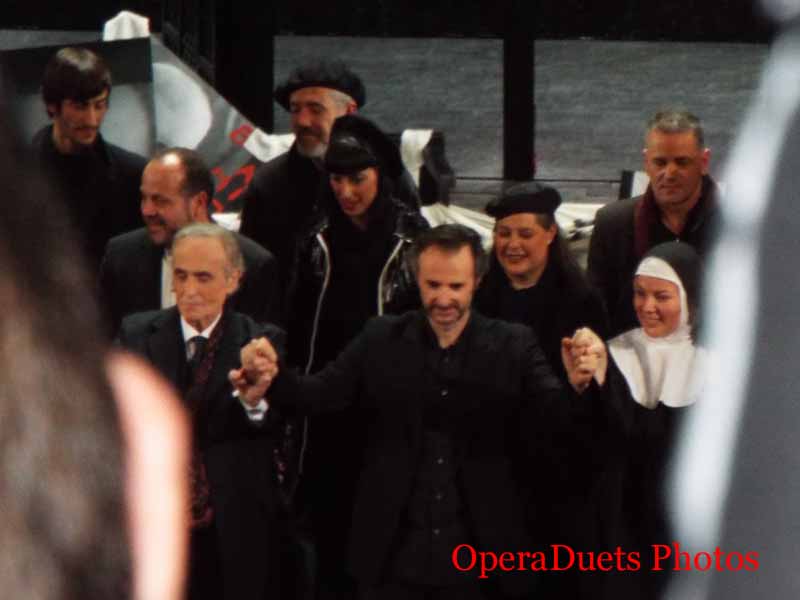
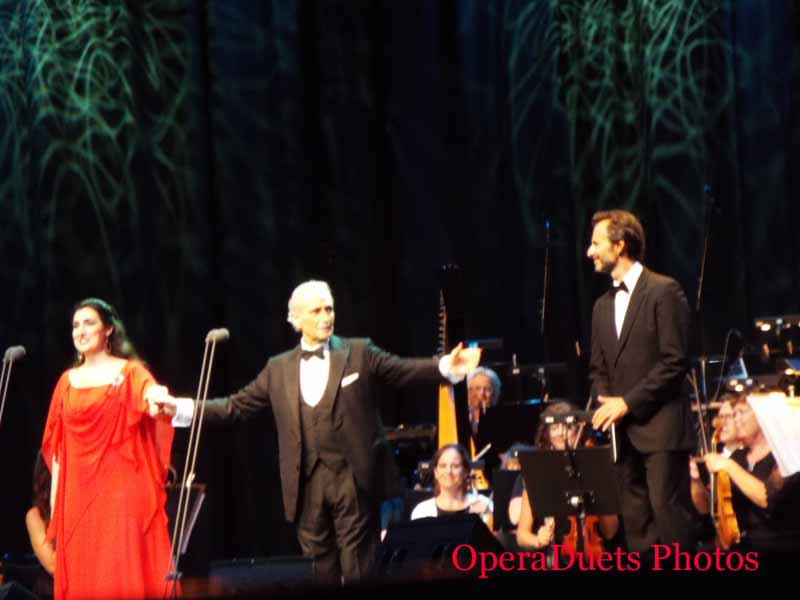
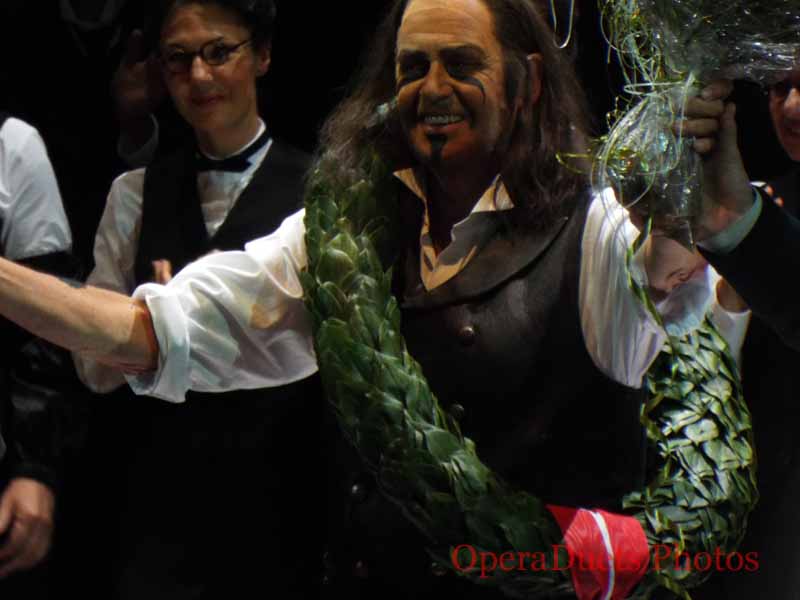
20 years Dalhalla Festival, Sweden - Jubilee Concert with Josep Carreras (2014-07-23)

2014-07-23 The Legendary Tenor José Carreras, Dalhalla, Sweden

José Carreras, tenor
Simge Büyükedes, soprano
Stockholm Concert Orchestra
David Giménez, conductor


THE LEGENDARY TENOR JOSÉ CARRERAS

On July 23rd, 2014 is it exactly 20 years since Birgit Nilsson opened the first Dalhalla festival with her concert. So this is the Jubilee Concert for Dalhalla. Josep Carreras was chosen to do the special Jubilee Concert as he is now a legend himself. Many years ago he sang with Birgit Nilsson in Tosca (in the US) and she refered to him as "her baby Cavaradossi".

Simge Büyükedes was the unknown quantity in this concert and she was the one who sang opera arias in the concert, the famous ones from Rusalka and La Wally. She was born in Istanbul, Turkey. A wonderful soprano voice that is like velvet. The weather that had threatened the concert with thunders, lightnings and heavy rains that luckily stopped in time of the concert begin at 2100 might have had an effect on her voice as it in the second half seemed to loose some of the strength. A slight cold could be hard on the voice. Josep Carreras was as he is nowadays a strong voice but not so subtle as when he was younger, no wonder when the man is over 67 years old. Nevertheless this was a party of well song canciones, musical tunes, zarzuela and opera arias. The Majesties of Sweden was there. And there were encores and Bravos and Bravas. The man holding it all together was David Gimenez conducting STockholm Concert Orchestra.


PROGRAM
1
1. Verdi: NABUCCO - Ouverture (Orchestra)
2. Donizetti: Te voglio bene Assaje (Carreras)
3. Tosti: L'ultima canzone (Carreras)
4. Dvorak: RUSALKA - Song to the Moon (Büyükede)
5. Albeniz: El eco de tu voz (Carreras)
6. Rubas: Rosó - pel teu amor (Carreras)
7. LA WALLY - Ebben ne andro lontana (Büyükede)
8. Bizet: L'Arlesienne suite - Farandole (Orchestra)
9. Leigh: THE MAN OF LA MACHA - The Impossible Dream (Carreras)

2
10. Rendine: Vurria (Carreras)
11. Valente: Passione (Carreras)
12. Delibes: Les filles de Cadiz (Büyükede)
13. Satie: Je te veux (Carreras & Büyükede)
14. Jimenez: LA BODA DE LUIS ALONSO - Intermedio (Orchestra)
15. Barbieri: EL BARBERILLO DE LAVAPIES  - Cancion de Paloma (Büyükede)
16. Caballero: EL DUO DE LA  AFRICANA - Duo y Jota (Carreras & Büyükede)
17. Cardillo: Core n'grato (Carreras)

ENCORES

1. Gitarra Romana (Carreras)
2.  I Could Have Danced All NIght (Büyükede)
3. Non ti scordar di me (Carreras & Büyükede)
4. Torna a Surriento (Carreras)
5. Libiamo ne lieti calici (Carreras & Büyükede)


For reviews from my travels, see www.operaduetstravel.com

Sunday, 6 July 2014

My weekend in Oslo with Der Fliegende Holländer 2014-06-22

It was supposed to be so nice. Finally I was to stay at Hotel Opera just across the opera house. Tired after a long night ride in the bus to Oslo rest in a nice hotel bed would be heaven. I booked via HRS.DE as I use to. I thought it would be no trouble, the check-in time was 1500 but I have never had trouble in any of the hotels I use now, not since the 1990s. The hotel was fully booked so I would have to wait. The lounge looked nice with many nice chairs and sofas to rest in. So I thought, no trouble I will just rest here for some time. A nice place to sit but after 5 minutes or less I was told that they had a policy of not letting people staying in the lounge. I having booked a hotel room in this hotel had thought I coud just stay just like has been allowed in other 4star hotels. A security woman came close. So I told the young woman who worked in the hotel that being treated this way I no longer wanted to stay in this hotel. One would think that working in hospitality sector they would be trained in offer apologise that does not work as another insult. "I am sorry that you feel like that". No really making me feel better was it. 3 times, at least, I had to repeat that I wanted to cancel and each time it seemed like she got it. But repeating the nonpology did nothing to helt. I cancelled the reservation also on HRS because I did not trust this "hotel person".

So that was not what I wanted 6 in the morning. 4 star hotel and potential hotel guest was asked to wait in the train station. Oslo main train station, Oslo S, is nice, but not anything to tell people who want to stay in a 4 star hotel to rest in. Tired and not happy I waited in Oslo S. Ate something. Then I was off to see my dad who has Alzheimers. Bus instead of train so it took longer. Then 3 hrs chatting with dad. He is nice and one can talk to him allright it is mostly his short term memory that is affected. Then back to Oslo. I did some shopping but I was tired, so tired. Luckily I have relatives in Oslo and I was allowed with them it was really nice, one cousin with wife and 2 girl, another with her husband and nr 3 had her last night until going back to USA. Tired as I was I should have gone to bed earlier but really seing my cousins again, I could not go to bed until they left.

Sunday. Breakfast with relatives and then to Oslo. It was opera matinee Der Fliegende Holländer 1500-1730. Opera with no breaks. Visits to the WC was stricly before or after. No snack between acts. But I was the last night of Terje Stensvold who was looking forward to be full-time grand-father. With his 70 years one can't really complain that he wants to retire. 


2014-06-22 Der fliegende Holländer (Wagner), Den Norske Opera & Ballet (Oslo)

Hollenderen = Terje Stensvold
Senta = Erika Sunnegårdh
Daland = Ketil Hugaas
Erik = Henrik Engelsviken
Mary = Tone Kummervold
Styrmannen = Marius Roth Christensen

John Helmer Fiore, conductor
Den Norske Opera & Ballet

REGI - Andreas Homoki
SCENOGRAFI - Wolfgang Gussmann
KOSTYMER - Wolfgang Gussmann
DRAMATURGI - Werner Hintze

LYSDESIGN - Franck Evin


I thought I would be so bored. This was Wagner after all. Opera with no intervals is just plain wrong. I have to admit I looked at my watch. First time I looked one hour had already passed. I thought I saw wrong numbers it was dark there. So this was working and with this regie and scenography it did not make sense to stop between acts.

Here one could have compassion with the Hollender because he care about Senta. When the H understand that Senta would probably suffer eternally he wants to stop the wedding. Senta has promised herself to Erik years ago but she is so much in love in the idea of the H. Erik loves Senta but he comes of more like a brute who has such self-pity. The H. is a man who has suffered a lot for his arrogance but his love for Senta makes him able to put Sentas life and happiness first, something Erik has not learned. Senta shows her "love" for the H. with sacrifising her life, she blows her brains out.

The Romantic Opera of Wagner. Where is the Romance really? Senta is not really the kind of woman one should aim to be. Daland, her father talks about her that she would be as pleasing and obidient to her husband as she is to Daland. Senta, my sweet child. But ever since she heard the story of the flying hollender she has been wild. So it was a great!!

After the opera and the applaus and the speech and flowers it was time to go home. I took the train to the airport and then flew home, and finally 2 weeks later I wrote this...

For more reviews from my travels, see www.operaduetstravel.com. 
If you want to see more photos from my OperaDuets Travels, go to www.operaduetsphotos.com

Wednesday, 11 June 2014

The Opera and The Truth

The Opera has always had difficulty with the Truth. 

The Truth with big T has always been elusive. Carmen by Georges Bizet was first a novel by Prosper Merimée. Maybe it is even true that the story of Carmen was told to Merimée by the real Don José. Would that mean that Merimée's Carmen was the true story of Carmen. How would we know what is the truth here? Don José could have lied about little things or big things, or maybe just believing in his ignorance that he knew more than he did. Lying by omission is common and lying by telling the truth as one believe it is and yet be mistaken. Merimée would as he adapted the story as a novel (or novella) could change bit and pieces as authors do. The knowledge that Prosper Merimée had on Spain and of the Spanish Gitanas, was that true facts or just what was at the time believed to be true. Merimée was no Spaniard. Did he need to be Spanish? Georges Bizet, the composer of Carmen, was French as Merimée. An Opera will never be exactly like the novel, theatre, poem or movie that it comes from. The libretto was by Meilhac and Halèvy. The music by Georges Bizet. The opera first comes when the libretto and music comes together. That is the easy way of telling it. The process of making an opera is usuay far more complex, a friendly or unfriendly cooperation that often threaten to make the creators going mad. 

So the opera Carmen is made. Then comes the creation of what is truly an opera, and that is the staged production of the opera. Otherwise CD's was enough. DVD of a staged production is more like the real thing. Carmen, the opera, is so alive and true for me that CARMEN is Spain and my understanding of the real Gitanas and Spanish women is based on Carmen, the character in this opera . I have been to Spain. I have seen Barcelona, Madrid, Bilbao, but still not been to Sevilla. I love Spain because of Carmen and I dream of going to Sevilla and to see Andalucia because of Carmen. This seems all very well. Except that the idea of Spain based on any opera or something like that is a lie or rather an untruth. Spain is happy to have a great tourist industry and Carmen fuels that. It is the exotism of Spain and the Gitanas that can be harmful.

Here comes the Regie. For me the right way is to look at the opera mostly and mostly ditch the source. Verdi's Don Carlos comes from Schiller's play which is based on true Spanish history. Schiller made his choices caring not overmuch about historical facts. The opera goes another step. The Regie has to match the opera, historical facts goes to the programmheft. 

The Opera needs to be truthful to the opera that is written. How historial true does it need to be? Analyze the text and the score to understand if an updating can be done without hurting the core of the opera. Do not let people sing sword and then use a revolver. I wish people did not thing booing means did they did it right. Usually it is not a sign that you are a genious. 

Sunday, 4 May 2014

And suddenly it is May, an abrupt travel to Spain

So nothing for April. Lazy April, and I feel guilty for that. I had thought to travel to Bilbao for the new opera with Josep Carreras, El Juez by Kolonits. Saturday 26th April, the first Premiere of a new Opera. Then I decided, no, too expensive and I am going to Erl, Austria to see it there in August. Then a Facebook friend invited me for the Salon Opera version of Carmen with Sergi Gimenez Carreras as Don Jose and that was in Barcelona on May 1st. So I started thinking could it not be combined with a Bilbao trip for El Juez on May 2nd with Josep Carreras as el juez Federico Ribas and conducted with David Gimenez Carreras. Just like that, an OperaDuets Travel for May 2014 is born.

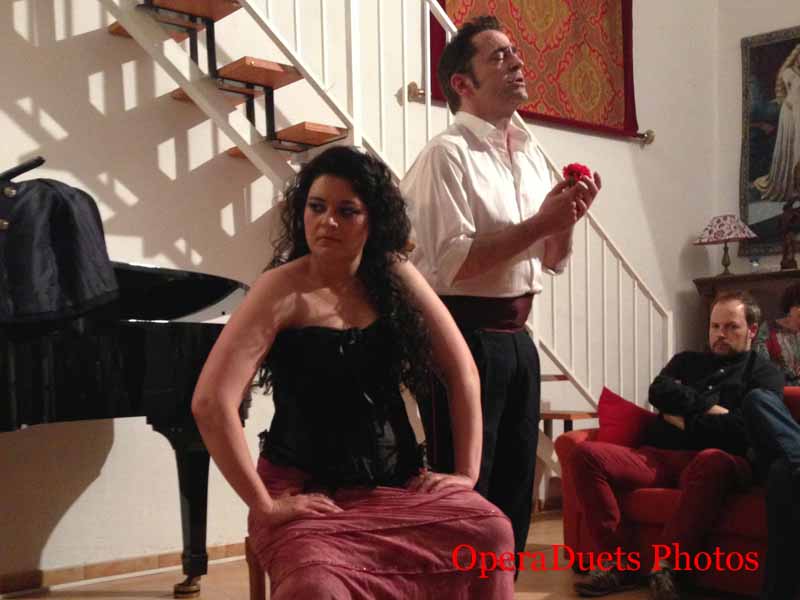
Being in Barcelona but not for the first time was great. Everything was going great. Well, except that I hardly slept on the bus to Oslo Gardermoen Airport, 7 hrs and maybe 2-3 hrs sleep. One can't sleep in the airport waiting hrs for my flight. No rest as some peoples was laughing so loudly and that seemed to go on forever. My headache did not help. Finally Barcelona came and finding my hotel went well. Tried resting. Then I was hungry needed to eat before opera, and then lost... Will I never find the Salon for this Carmen. My headache thundered. Then I was in a street and some other people was looking to find... something, and then I could see tickets. No longer lost in Barcelona was I. And in time for Carmen, the audience was in time, the Salon was still sorting things out. Then Prelude to Carmen. The was a staged Carmen, not the complete opera but with nothing essential missing. A piano was the orchestra and the pianist was up to the task. With full passion and acting it all out, this was CARMEN!!!

2014-05-01 Carmen (Bizet), Salon de Opera (Barcelona)

CARMEN - Ana Ferro
DON JOSÉ - Sergi Giménez
MICAELA - Cristiana Oliveira
ESCAMILLO - Nuno de Araujo Pereira
FRASQUITA - Anna B. Gómez
MERCEDES- Carla Mattioli

Piano - Montse Pujol Dahme
Sitting just a few feet from the opera singers this was intense. On sofas and chair in a living room with a piano we sat. The prelude and entr'acte was played on speakers. Then the pianist starts the live opera or maybe we should call it lived opera. The space was used for optimal operatic tension. The staircase was used theatrically and so was other rooms used as backstage. One of the best Carmen performances and in such a limited space! Amazing!!!

Then a train travel to Bilbao. Not my first time there but for all practical matters it could be.
2014-05-02 El Juez (Christian Kolonovits), Teatro Arriaga (Bilbao)

Federico = Josep Carreras
Paula = Sabina Puértolas
Alberto = José Luis Sola
María/1ª monja = Mª José Suárez
2ª monja = Itziar de Unda
Paco (cameraman) = Manel Esteve
Abadesa = Ana Ibarra
Morales = Carlo Colombara
Hombre 1 = Alberto Núñez
Hombre 2 = Giorgi Meladze
Hombre 3 =José Manuel Díaz
Hombre 4 = Mikel Zabala
Mujer mayor = Milagros Martín
Figuración (niña) = Laia de la Fuente

David Gimenez, conductor
Coro niños perdidos: Kantika Korala
Director: Basilio Astúlez
:
Coro: Coro Rossini
Director coro: Gerardo Carbajo
:
Orquesta: BIOS

Dirección escénica: Emilio Sagi
Escenografía: Daniel Bianco
Figurinista: Pepa Ojanguren
Iluminación: Eduardo Bravo
Ayudante de dirección escénica: Javier Ulacia
Maestra repetidora: Husan Park
Realización de escenografía: Neo Producciones
Realización de vestuario: Pepispoo

A new opera in Bilbao, an old one in Barcelona. Josep Carreras in a new role as the Judge Federico Ribas. The tragedy happens when people agree to dubious thing for a supposed higher reason. It was another villain role for Carlo Colombara. The Italian bass was Morales. Morales is a role cast from the same mold as Baron Scarpia in Puccini's Tosca. Even worse than Scarpia and more towards Mefisto. Pure evil but suppossedly in the service of the Church. Probably just after power and lust for violence. 

Alberto is a man in search of his brother. The brother is one of The Lost Children. Children taken by the Church and given other parents without knowledge of the truth. Alberto with journalist Laura is on the task to find out more of the lost children. This threatens the Church and Morales. So Morales talks to Alberto and promises him to know who his brother is. The catch is that the judge that Alberto will threaten is Alberto's brother. And Morales knows this, so he will crush two in one crash. Before any happy end can happen Morales kills Alberto. As Alberton lies dying, brother meets brother. SAD END!!!

Tuesday, 18 March 2014

Stiffelio in Stockholm with Andrea Caré and Lena Nordin (March 8, 2014)

It was the first time that I saw and heard the tenor Andrea Caré. I do think I have found my new favorite tenor. He was just wonderful as Stiffelio. 

After 27 years working in Royal Opera House in Stockholm Lena Nordin was singing her last role as permanent engaged as opera singer. Now she is officially retired. But as Birgitta Svenden, the opera chief said she will still work in other opera houses and with her festival and also come as guest to Stockholm opera house.

I almost missed that the opera started 1500 and not 1900 as I thought. It was cold in Stockholm, not as bad as in January. Since I had already seen the production before, and did not love it, but as I had seen it I found it easier to like it this time. Having Andrea Caré as Stiffelio helped a lot. I think the whole ensemble was better, more together. Las time we had two Stankars, one singing and one acting. Now we had the unity that was missing. Lena Nordin was Lina that time, too. I think that Andrea Caré was inspiring them all. And then it was Lena Nordin chance to go out with a bang. Lovely!!!

Andrea Caré is a young tenor and hope he will have a long and exciting career. One could not have a better Stiffelio, not even Carreras, Domingo or Cura could do better!!! As a Cura fan I would love to see him in Stockholm as Stiffelio... Andrea Caré is just simply lovely. His voice has everything, strength and sweetness.


2014-03-08 Stiffelio (Verdi),Kungliga Operan (Stockholm)

Stiffelio = Andrea Caré
Lina = Lena Nordin
Stankar = Kosma Ranuer
Raffaele = Jonas Degerfeldt
Jorg = John Erik Eleby
Federico = Klas Hedlund
Dorotea = Sara Olsson

Giampaolo Bisarti, conductor
Stage design and costumes:Magdalena Åberg 
Light design: Ellen Ruge 
Dramaturg: Stefan Johansson 
Producer: Tobias Theorell 

Wednesday, 26 February 2014

My short weekend in Berlin (22-23. february 2014)

This time I was in Berlin for a concert of South American music. It was a nice trip. Another time something I did just because Jose Cura would be there singing Argentinian songs.

A reviewer of the concert said that Cura seemed to be uncertain and not fully himself until he sang Aurora by Panizza. He must have been on another concert. The concert was on Friday 21, Saturday 22, and Sunday 23., I was there on Saturday, the reviewer was probably on Friday. I cannot be sure that he was wrong since I only attended the concert on Saturday but I think he was mistaken. Of course a tenor would sing an opera aria with a fuller voice than he would sing the delicate classical art songs of Guastavino and Ginastera. Aurora is an opera by Panizza, the Intermezzo Epico is an Opera Aria. The songs of Guastavino and Ginastera are canciones. With Aurora comes the Opera Tenor Jose Cura, with the canciones comes the recitalist Jose Cura. On Saturday Cura showed that he can sing with his sweetest voice what must be sung so and with more forceful when the text demands it. This is fine and delicate work done by a master. Everybody knows Jose Cura as a operatic tenor with his famous Otello, Samson, Calaf. So those who expect to hear something more like Otello find something familiar when he sings the Song to the Flag from Aurora. 

http://www.kulturradio.de/rezensionen/buehne/2014/konzerthaus_festival_suedamerika_2.html

I must say that I liked best Huapango by Moncayo. The orchestra works of Ginastera was too much noice. Of course, the cello player was divine. I loved the conductor. And Jose Cura was wonderful!!!

2014-02-22 Konzerthausorchester Berlin, Christian Vásquez, Konzerthaus Berlin

José Cura, tenor
Claudio Bohórquez, Violoncello 

Konzerthausorchester Berlin
Christian Vásquez, conductor

PROGRAMM

Silvestre Revueltas (1899 – 1940)
„Sensemayá“

Alberto Ginastera (1916 – 1983)
Konzert für Violoncello und Orchester Nr. 1 op. 36
ADAGIO MOLTO APPASSIONATO
PRESTO SFUMATO – TRIO NOTTURNALE
ASSAI MOSSO ES ESALTATO – LARGO AMOROSO

José Pablo Moncayo (1912 – 1958)
„Huapango“

PAUSE

Carlos Guastavino (1912 – 2000)
„Las nubes“ (Die Wolken)
Texte: Luis Cernuda Orchesterbearbeitung: Guillo Espel
JARDIN ANTIGUO (DER ALTE GARTEN)
DESEO (VERLANGEN)
ALEGRÍA DE LA SOLEDAD (DIE FREUDE DER EINSAMKEIT)

Albero Ginastera
Tänze aus dem Ballett „Estancia“
DANZA FINAL (MALAMBO). ALLEGRO


Carlos Guastavino
Tres canciones
Texte: Luis Cernuda Orchesterbearbeitung: Guillo Espel
VIOLETAS (VEILCHEN)
PÁJARO MUERTO (DER TOTE VOGEL)
DONDE HABITE EL OLVIDO (WO WOHNT DAS VERGESSEN)

Alberto Ginastera
„Cancion al árbol del olvido“
(Lied auf den Baum des Vergessens, 1938) Text: Fernán Silva Valdés

Arturo Márquez (*1950)
„La Conga del Fuego“

Héctor Panizza (1875 – 1967)
„Intermezzo Épico“ aus der Oper „Aurora“ 

2 extra orchestra numbers, first was very famous and catchy but I don't remember what it is called, last one was Mambo from West Side Story by Leonard Bernstein.

Then it was night talk with Jose Cura. My batteries was empty so no photos from the concert and only phone photos from the night talk in the music club.